Science: Biology
6.1.3 Genetic Inheritance
Exam Board: AQA
Genetic Inheritance
You need to know the following definitions for the exam:
An allele is a version of a gene. Take eye colour for example, it is determined by a gene with multiple versions - brown, blue, green etc. - these are all alleles.
Most traits → multiple genes + environment
We can work out the genotype of a couple's offspring using a Punnett Square (aka a Single Gene Cross)
The question will ask you to calculate the change that the offspring has a specific genetic disease. For example:
Polydactyly (extra fingers) — Disease (Dominant) (D), Normal (Recessive) (d)
-
The Disease is dominant so is given a capital D
-
The normal version of the gene is recessive so is given a lower case d
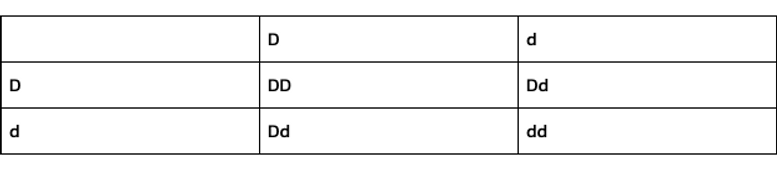
The alleles for the first parent go along the top and the second top along the side. You will be given these in the exam. In our example, the parents will both have the alleles Dd.
You then combine the letter in each box and always put the capital first.
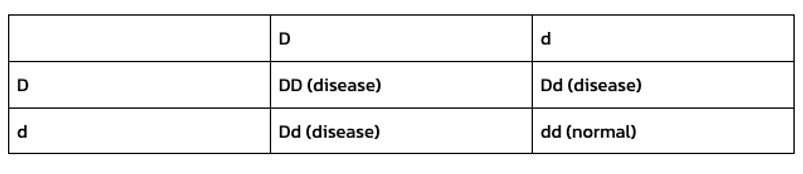
You can then calculate the percentage that the offspring has the disease. Because Polydactyly is dominant, only one D is needed for the disease to be present.
Offspring:
• 75% chance of polydactyly (DD, Dd)
• 25% chance of normal (dd)
You need to know 2 examples of genetic disorders and their allele:
A common example of where you need to use a Punnett Square is in sex determination. The 23rd and final pair of chromosomes in humans determine the individual's sex.
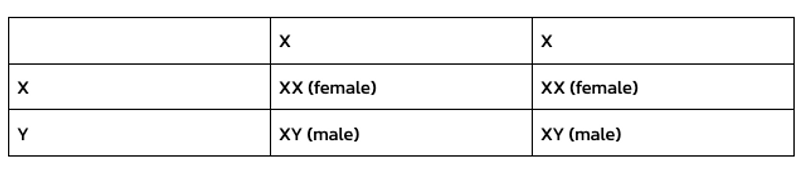
A female has XX chromosomes and a male has XY.
This can be shown in a genetic cross:
This shows how the chance of the baby being either sex is even: 50% male, 50% female