Science: Biology
5.2.3 Maintaining Water & Nitrogen Balance (Biology Only)
Exam Board: AQA
Maintaining Water & Nitrogen Balance
Water loss in the body cannot be controlled. It is uncontrollably lost in 2 main ways:
-
Lungs (water vapour is breathed out)
-
Skin (sweat) → when you sweat, the body expels water, ions and urea
The kidneys produce urine in the following way:
-
They filter most things out of the blood
-
They reabsorb all glucose, some ions, and any needed water
-
They then excrete excess water, some ions and all urea
(HT Only) Urea Formation
Urea is formed from excess amino acids from protein. Excess amino acids are deaminated in the liver to make ammonia (toxic) which is converted into urea (safe) and excreted via urine.
(HT Only) ADH (Antidiuretic Hormone)
ADH is a hormone released by the pituitary gland in the brain. It then acts on the kidney tubules to control the amount of water reabsorbed before it is excreted in urine.
Here is a table to illustrate how this is controlled:
More ADH causes more water reabsorption so more water is kept in the blood and less is excreted in urine.
This is another example of negative feedback.
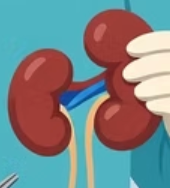
The Kidneys
Kidneys are very important in regulating blood content.
Kidneys can fail for natural reasons or because of lifestyle decisions and you must be aware of potential treatments: