Science: Biology
2.1.5 Non-Communicable Diseases
Exam Board: AQA
Health
Health is the complete physical and mental wellbeing of an individual. A disease is a major cause of ill health.
A non-communicable disease is a disease which cannot be spread between people, e.g. cancer, coronary heart disease.
Cardiovascular Disease
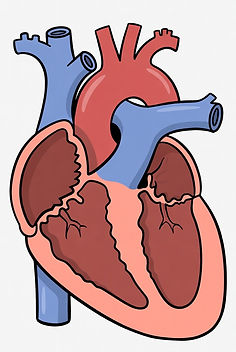
Coronary heart disease (CHD) disease is the build up of fatty deposits in the coronary arteries.
This leads to a narrow lumen so less oxygen gets to the heart muscle thus increasing the risk of a heart attack.
Coronary heart disease is an example of a cardiovascular disease (disease involving the heart and blood vessels)
Treatments for Cardiovascular Disease — Evaluate Pros & Cons
Issues with non-communicable diseases:
-
Human Cost
• Loss of life
• Reduced quality of life
• Emotional stress on family
2. Financial Cost
• Treatment (NHS)
• Lost work (productivity)
• Home adaptations, travel
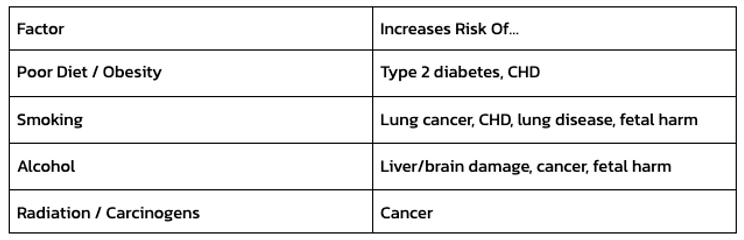
Lifestyle risk factors are actions in your life that increase your risk of developing disease. You need to know the following examples:
Causal mechanism = proven link (e.g., smoking → lung cancer)
Local, National & Global Trends
• Higher obesity in low-income areas → more diabetes
• Smoking rates falling in UK, rising in some countries
• Alcohol harm higher in deprived communities
Cancer
A tumour is a mass of abnormal cells. They can either be benign (does not grow or alter, effectively harmless) or malignant (cancer). A benign tumour can progress and become malignant.
Cancer (a malignant tumour) refers to uncontrolled cell growth and division due to DNA changes
Cancer Risk Factors
• Lifestyle: smoking, alcohol, poor diet, UV exposure
• Genetic: inherited faulty genes (e.g., BRCA)