
Science: Biology
1.1.3 Specialised Cells and Differentiation
Exam Board: AQA
Specialised Cells
The most basic cell is a stem cell. These cells only have the basic structure and subcellular components listed in the previous section.
We then have specialised cells. These cells develop special features that stem cells don’t have to carry out specific jobs. We need to know examples of specialised cells in both animals and plants.
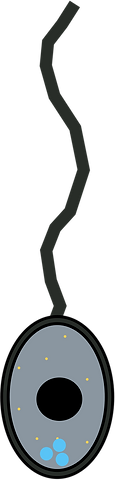

Sperm Cell
Long flagellum (tail) to swim towards the egg
Packed with mitochondria for energy (aerobic respiration)
Digestive enzymes at the tip to digest the egg’s outer layer
Nerve Cell
Long axon to carry electrical impulses over distances
Dendrites (branches) to connect with many other nerve cells
Myelin sheath to speed up impulse transmission
Animal Cells
Muscle Cell
Full of mitochondria for energy
Contains contractile proteins allowing the muscle to contract
Arranged in fibres for coordinated movement

Plant Cells
Root Hair Cell
Long hair-like extension to increase surface area for water and mineral uptake
Thin cell wall for fast diffusion
Many mitochondria for active transport

Phloem Cell
Sieve plates allow sugar flow between cells
Very few organelles to maximise transport space
Companion cells to support metabolic processes
Alive — uses energy for active transport of sugars


Xylem Cell
Hollow tube (no cell contents — dead cell) for water flow
Walls strengthened with lignin to prevent collapse
Perforated end plates for continuous water movement
Differentiation
Differentiation is when an unspecialised cell (like a stem cell) develops specific structures to perform a function and becomes a specialised cell.
In animals, most cells differentiate early in development and lose this ability.
In plants, many cells keep the ability to differentiate throughout life (e.g. forming new roots or leaves).
In mature animals that are fully grown, cell division is mainly for repair and replacement as new cells are not needed for growth.